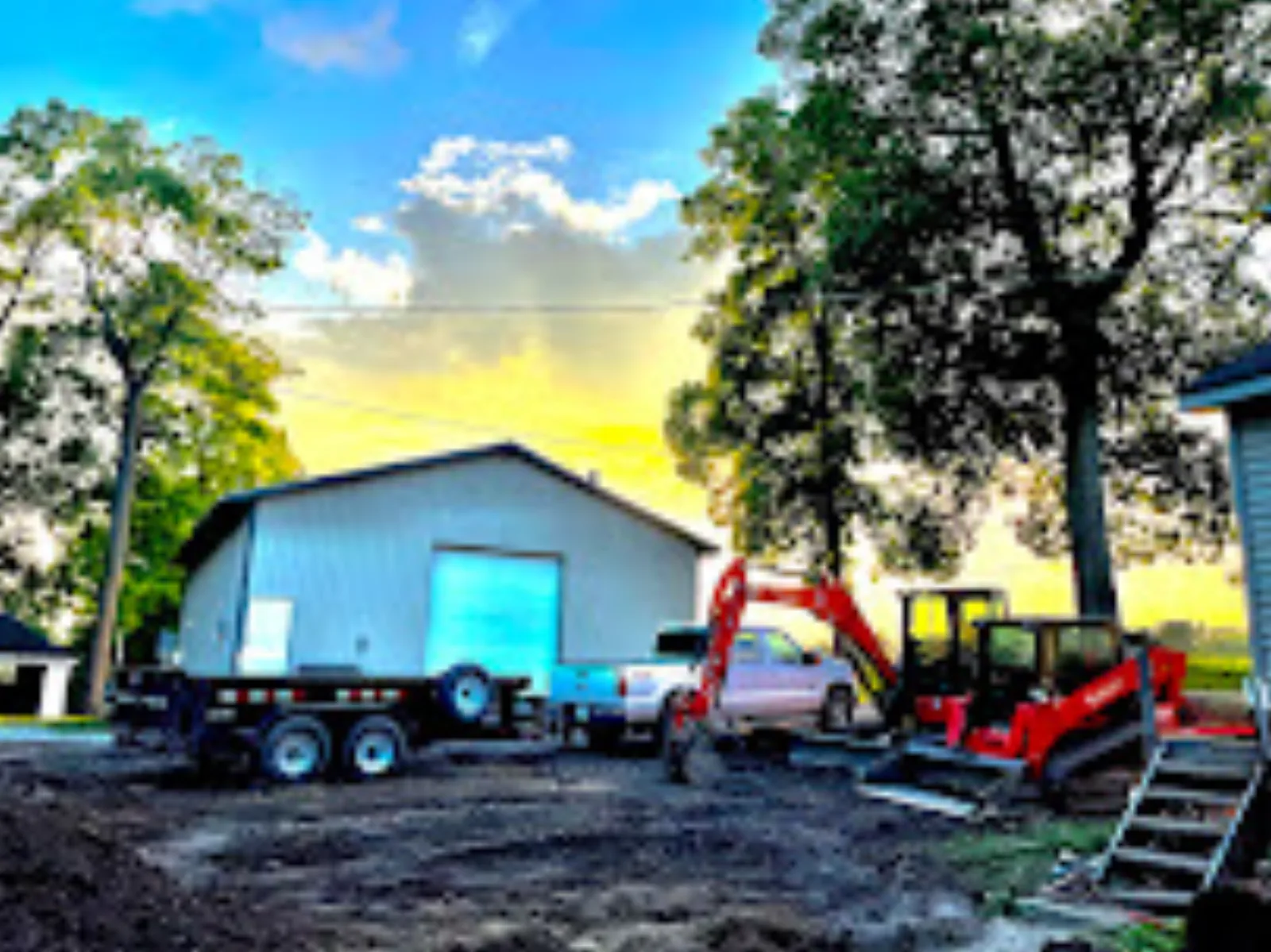
Short Excavating loads out of Fort Wayne, which puts Westfield a real drive away rather than across town. That is worth saying plainly, because it changes how a job gets scheduled: the work gets planned as a continuous block with the machines staying put, rather than as visits squeezed between local stops. For most excavation that is an advantage. It does mean the calendar matters more, so tell us your real dates on the first call.
Plenty of contractors will not tell you where they are coming from. We would rather lead with it, because it shapes what you should expect and because pretending otherwise falls apart the first time somebody asks why the trucks are not there at seven.
The shop is in Fort Wayne. Westfield is a genuine road trip from there, not a cross-town run. Here is what that means in practice and why it works out better than people assume for the kind of work we do.
Excavation is not a trade that benefits from being close
For some trades, proximity is the whole value. If a water heater fails on a Tuesday night you want somebody fifteen minutes away, and everything else is secondary.
Dirt work is different. An excavation job is not a service call, it is a project: the equipment comes on a trailer, gets unloaded, does days of work, and goes home. Whether that trailer drove twenty minutes or a couple of hours, the day on your lot looks the same. What matters is that the machine is the right size, the operator knows what he is doing, and the ground gets read properly before anything moves.
So distance costs travel time. It does not cost you quality, and it does not change how long the actual work takes.
What it changes: the job runs as one block
Here is the real practical difference, and it happens to be the good part.
A contractor working out of his own town can bounce. Two hours here, half a day there, back tomorrow, off to another job when something comes up. Owners of half-finished projects know that pattern well: the open trench that sits for a week, the pad that got started and then waited.
When the equipment travels, that stops being an option. The machines come, they stay, and the work runs continuously until it is done. There is no reason to shuttle back and forth, and every reason not to. It concentrates the job instead of stretching it.
Most people find that easier to live with, particularly on a project like site preparation or excavation work where a half-finished site is genuinely disruptive to have sitting in your yard.
What it changes: the calendar matters more
The honest tradeoff is scheduling flexibility. A crew already in Westfield can shuffle a morning around. Equipment coming from out of the area is committed once it rolls.
Which means a few things for you:
- Give real dates on the first call. If a builder needs a pad by a certain week, or you are trying to get a drive in before a delivery, say so up front rather than after the quote. It determines whether we can commit honestly.
- Book ahead when you can. Weeks out is comfortable. The day before is a hard ask for anybody, and harder when there is a haul involved.
- Expect a straight answer about timing. If we cannot make your window, we would rather tell you now than string you along and disappoint you later. That is a small industry courtesy that goes missing more often than it should.
What it changes: weather is a bigger factor
This is the part worth understanding, because it is where a traveling crew and clay soil interact.
Central Indiana ground has to be worked at the right moisture. A hard rain shuts things down for a few days regardless of who is holding the controls. When a contractor lives in town, a rain delay is a shrug. When the equipment has traveled, a rain delay means a decision: wait it out or pull off and come back.
Neither option is free, and the answer depends on the job. What we will not do is work saturated clay just to avoid a return trip. That produces a soft pad, a rutted lot and a driveway that never sets up properly, and it is exactly the shortcut that separates a job that holds from one that does not.
So if you are on the calendar and it dumps rain the night before, expect a phone call with a plan, not silence. And build a little slack into your own dates in spring, which is the wettest stretch of the year here.
What it changes: getting the scope right the first time
When somebody is local, a vague conversation is survivable. He swings by, looks, comes back with a number, swings by again. When there is a drive involved, that loop is expensive for everyone, so the visit has to do more work.
That has made us better at it, honestly. The owner walks the whole property rather than the one problem you called about, because the thing you called about is often connected to something forty feet away. He wants to see where water arrives as well as where it stands. He asks what else you are planning in the next year or two, because doing the drive and the drainage in one mobilization beats doing them separately.
The result is that a single visit usually produces a complete picture and a real number, instead of a partial answer and a promise to come back.
Get it all done in one trip
This is the piece worth planning around deliberately. If you know you need a wet corner fixed and you have also been thinking about extending the drive or clearing a fence line, mention all of it at once.
Grouping work into one mobilization is more efficient for everybody. The equipment is already on site, the ground is already open in places, and the owner is already there to make decisions. Sequencing matters too: rough grade before the drive goes in, drainage lines before the finish grade, because doing them out of order means tearing up finished work.
Say the whole list on the first call, even the parts you are unsure about. Sorting out what should happen now and what can wait is a five-minute conversation, and it is a lot cheaper than a second trip.
What does not change
The standard. The owner runs the equipment and checks the parts that get buried: the slope, the bedding, the compaction, the way the pipe is joined. That is identical on a Westfield job and on one twenty minutes from the shop. Travel affects logistics. It does not touch how the work gets done.
If you are in Westfield and thinking about dirt work this season, the useful next step is a conversation about what you need and when. Look at finished projects in the gallery, then tell the owner what you are planning and get your number.
Common questions
Does coming from out of the area cost me more?
Travel is one input among many, and the way it is minimized is by planning the job as a continuous block instead of a string of short visits. The bigger cost drivers on any excavation job are how much material moves, what the access is like, and what the ground turns out to be. The owner walks the site and gives you a real number that accounts for all of it.
How far ahead should I book a Westfield job?
Sooner is better, especially in spring when weather eats days. Weeks of notice is comfortable and lets the work get slotted properly. Short notice is worth asking about, but a traveling crew has less room to shuffle than one already working in town, so the honest answer depends on the calendar that week.
What happens if it rains while you are working on my lot?
You get a call and a plan. Depending on how much is left and what the forecast looks like, the choice is to wait for the ground to come back or to pull off and return. What does not happen is working saturated clay to stay on schedule, because that produces settling and soft ground you would be living with afterward.
Can you do several projects on one visit?
Yes, and it is the smart way to use a mobilization. Drainage, grading, a driveway and clearing can be sequenced into one stretch of work while the equipment is on site. Mention everything you are considering on the first call so the sequence gets planned right the first time.
Is the owner actually on the job, or does he send a crew?
He is on it. This is an owner-operated business, and he runs and oversees the work himself rather than dropping off a crew. That is true for jobs near the shop and for jobs that take a drive to reach.
Planning dirt work in Westfield? Let’s talk dates.
Owner-operated excavation, drainage and grading across Westfield and Hamilton County. Straight answers about timing, and one visit that reads the whole property.
Call the Owner (260) 216-9073 What It’ll Cost